2021Nominee
Best Performance
Day
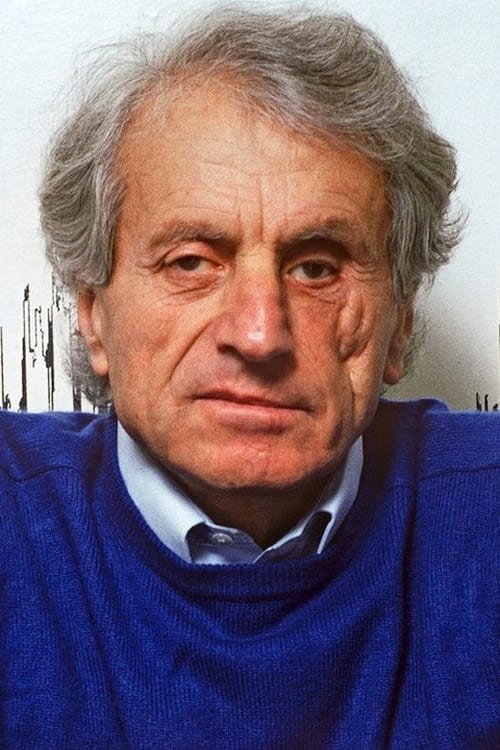
Actor · Director · Writer
Giannis Klearchou Xenakis (also spelled for professional purposes as Yannis or Iannis Xenakis; Greek: Γιάννης "Ιωάννης" Κλέαρχου Ξενάκης; 29 May 1922 – 4 February 2001) was a Romanian-born Greek-French avant-garde composer, music theorist, architect, performance director and engineer. After 1947, he fled Greece, becoming a naturalised citizen of France eighteen years later. Xenakis pioneered the use of mathematical models in music such as applications of set theory, stochastic processes and game theory and was also an important influence on the development of electronic and computer music. He integrated music with architecture, designing music for pre-existing spaces, and designing spaces to be integrated with specific music compositions and performances. Among his most important works are Metastaseis (1953–54) for orchestra, which introduced independent parts for every musician of the orchestra; percussion works such as Psappha (1975) and Pléïades (1979); compositions that introduced spatialization by dispersing musicians among the audience, such as Terretektorh (1966); electronic works created using Xenakis's UPIC system; and the massive multimedia performances Xenakis called polytopes, that were a summa of his interests and skills. Among the numerous theoretical writings he authored, the book Formalized Music: Thought and Mathematics in Composition (French edition 1963, English translation 1971) is regarded as one of his most important. As an architect, Xenakis is primarily known for his early work under Le Corbusier: the priory of Sainte-Marie de La Tourette, on which the two collaborated, and the Philips Pavilion at Expo 58, which Xenakis designed by himself. Giannis Klearchou Xenakis was born in Brăila, Romania—the site of a large Greek community, as the eldest son of Greek parents; Klearchos Xenakis, a businessman from Euboea who was managing director of an English export-import agency and one of the richest men in the city, and Fotini Pavlou from Lemnos, a pianist who also spoke German and French. His two younger brothers were Jason, who became a philosophy professor in the United States and Greece, and Kosmas, an architect, urban planner and artist. His parents were both interested in music, and it was Pavlou who encouraged the young child to learn more about it: the young Giannis was given a flute by his mother, and the family visited the Bayreuth Festival several times, due to his father's interest in opera. Her early death in 1927, when Xenakis was five years old, was a traumatic experience that, in his own words, "deeply scarred" the future composer. She had previously been infected from measles and died after giving birth to a stillborn daughter. He was subsequently educated by a series of English, French, and German governesses, and then, in 1932, sent to Greece to study at the Anargyrio-Korgialenio boarding school on the Aegean island of Spetses. He sang in the school's boys' choir, where the repertoire included works by Palestrina, and Mozart's Requiem, which Xenakis memorized in its entirety. ... Source: Article "Iannis Xenakis" from Wikipedia in English, licensed under CC-BY-SA 3.0.





Best Performance
Day
Best Performance
Fer chaud
Best Performance
Vasarely
Best Performance
OSN: Michele Gamba interpreta Zimmermann, Poppe e Xenakis per Rai NuovaMusica
Best Performance
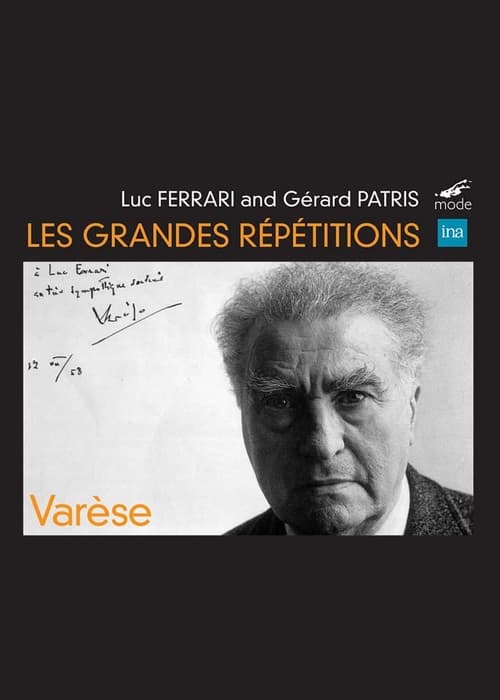
The Great Rehearsals: Homage to Edgard Varèse